Bedrooms: 2
 Bathrooms: 4


This house (approx. 200 sq.m.) at the entrance to the ancient village, was renovated in 2002/2003. It is on three levels and is served by an internal lift as well as a spiral staircase and has external entrances both at the front and back of the property. The windows have wooden frames, with external aluminium shutters or wrought iron gates. And there are exposed wooden beams and terracotta tiles throughout the house.
The house is composed as follows:
Ground floor: a large living room with windows overlooking the valley of Celleno and a large fireplace. A room with classic brick vaulted ceiling with an independent entrance. A further room with an exit to the square behind the property overlooking the valley of Celleno with an adjoining bathroom with double shower.
First floor: A double bedroom, a single bedroom, a large bathroom with shower and antique bathtub and a bathroom with shower.
Basement: large kitchen with fireplace and French doors leading on to a partially covered terrace with a gazebo. Boiler room and a small bathroom with sink.
The house has a central vacuum system with motor in the boiler room and vents in each room. There is also an amplification system in all rooms and high speed internet (fibre)
The heating system was renovated in 2022 with a new condensing boiler and thermostatic valves on all radiators. Each floor has an adjustable thermostat.
The information and floor plans provided are set out for guidance only and do not constitute contractual elements.

Bagnoregio 10 km
Lubriano 13 km
Viterbo 16 km
Attigliano 24 km
Orvieto 33 km
Rome 116 km

Rome 116 km

Tarquinia 62 km
Montalto di Castro 64 km

Bolsena 13 km

A1 motorway (Attigliano exit) 24 km
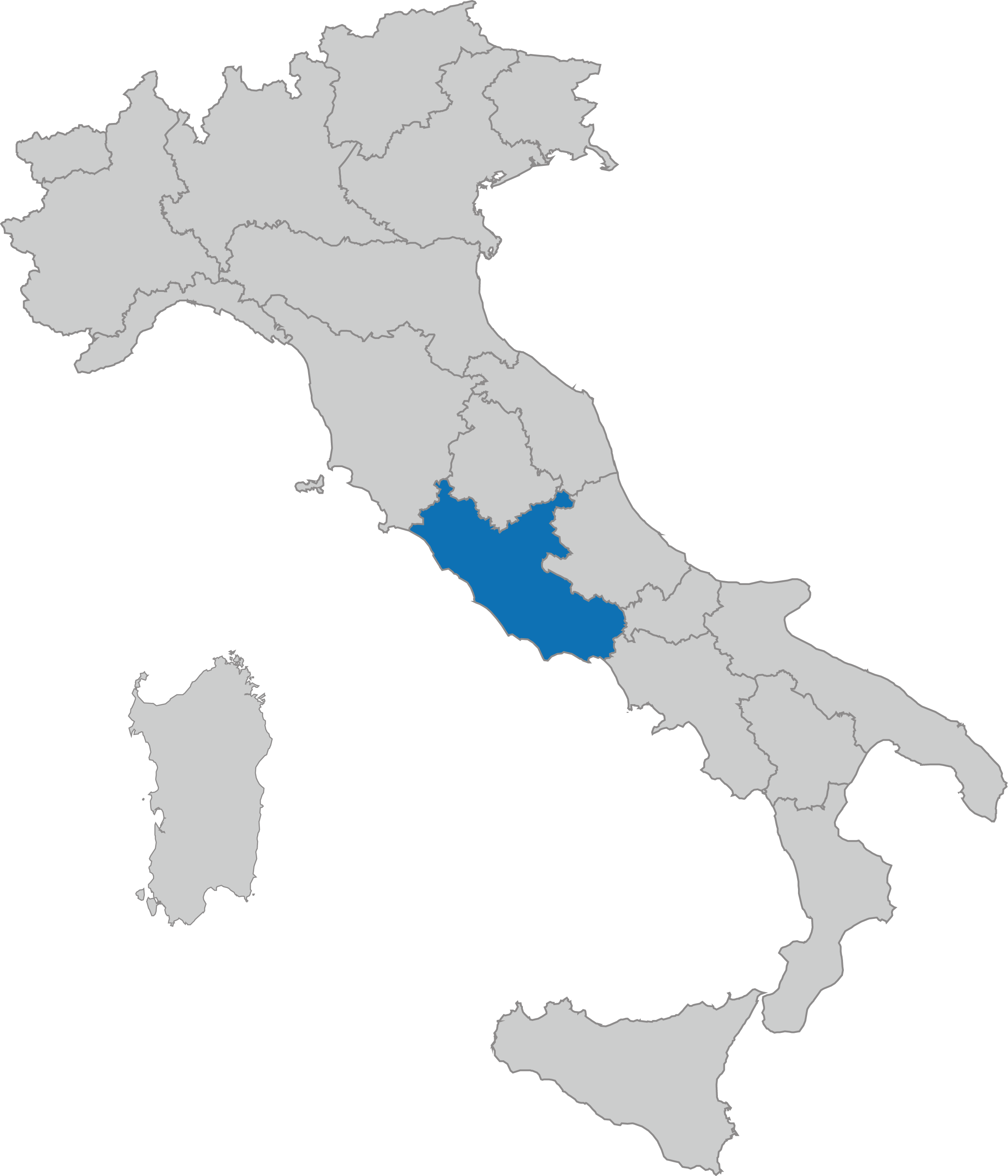
Upper Lazio: Celleno
Celleno is known as the "town of cherries" and there is an annual cherry festival held there.
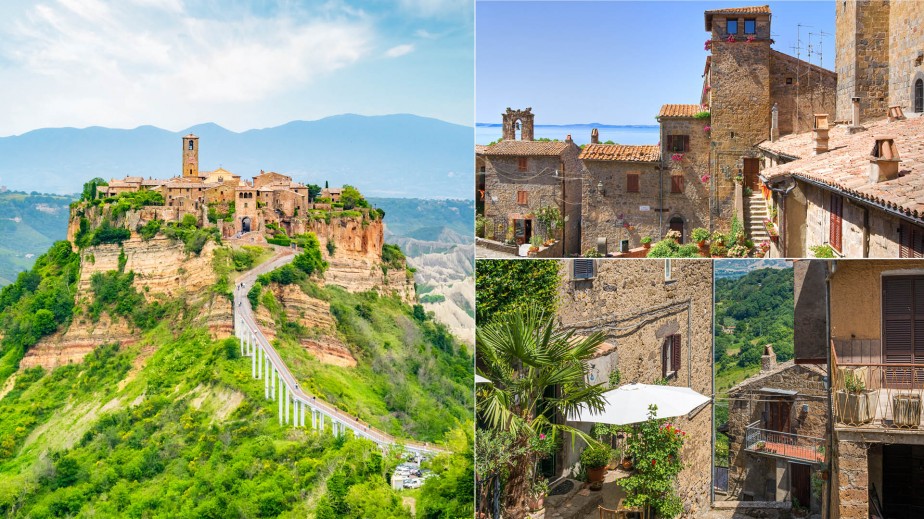
The town is divided into two areas, the modern part where there are the main services and the ancient one where the historic center stands from which you can access, through a majestic bridge, the wonderful "Ghost Village".
Celleno Antica is one of the most beautiful ghost towns in Italy, a lost city where the majestic Orsini Castle, which has remained unchanged over the centuries, watches over the medieval village with its characteristic red tuff houses.
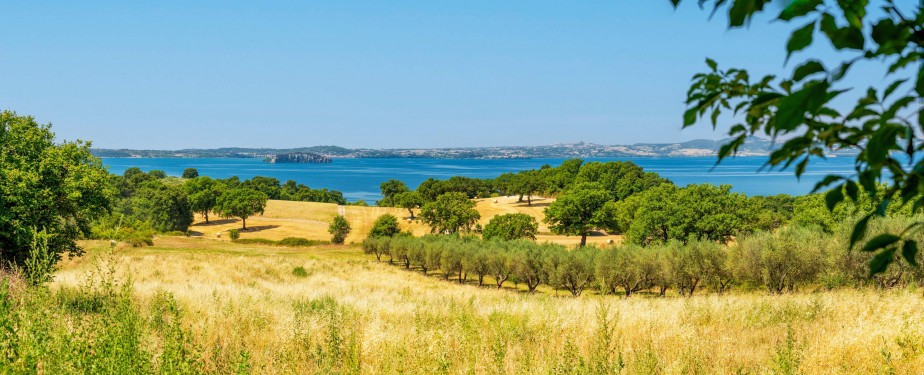
Upper Lazio is one of the lesser-known corners of the Italy but it has an important past with discreet charm and beautiful countryside. Little is said about this place, perhaps because it is surrounded by many famous places, thus keeping the beauty of this corner of the region hidden. One of the most evocative areas of Upper Lazio is La Tuscia, the beating heart of central Italy.
Surrounded by breathtaking countryside with picture postcard landscapes, where ancient villages and castles sit on the verdant hills dotted with vineyards, woods and farmhouses, creating an unforgettable mosaic of colours and a unique landscape, where time seems to have stopped.
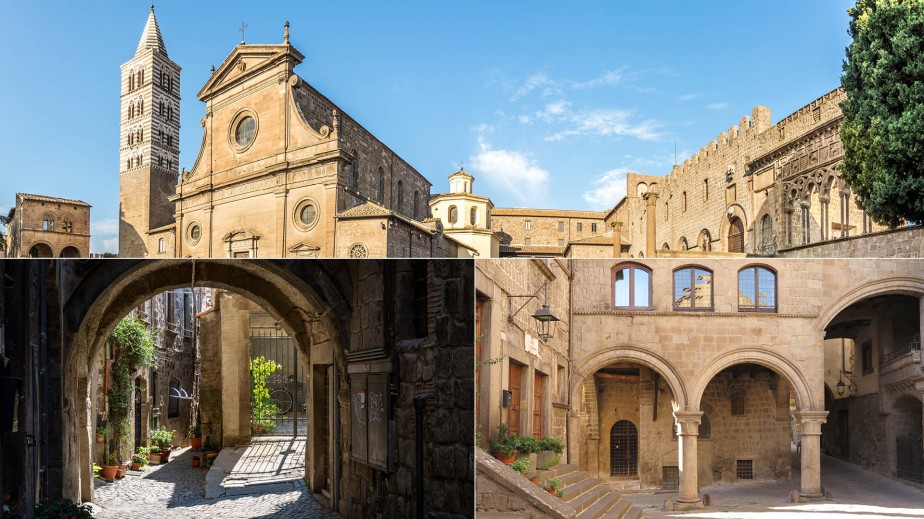
The Tuscia area today includes more or less the entire province of Viterbo and preserves true naturalistic and artistic treasures. To discover Tuscia is to discover the history of Italy itself and to reveal its roots, the ancient land of the Etruscans, whose traces are still clearly visible in the many archaeological sites that dot its territories and today have become a UNESCO World Heritage Site.
For centuries it has been an important crossroads due to its strategic position, just a stone's throw from Rome, it has seen princes, kings, aristocrats and generals pass through accompanied by great artists and architects who have left behind authentic masterpieces.
Thanks to the numerous thermal springs, it became a holiday resort for the Romans and reached its maximum splendor in 1207 when Viterbo was elected City of the Popes, Tuscia is a corner of Italy to be discovered at a slow pace, getting lost among its thousand beauties.
Mysterious parks, fairytale villas, evocative palaces and villages of yesteryear await you!
Places of interest: